Do I need gas receipts if I use the standard mileage rate?
Not to deduct the gas. IRS Publication 463 says that if you use the standard mileage rate for a year, you cannot deduct your actual car expenses for that year, and it names gasoline among them, along with depreciation, lease payments, repairs, oil, insurance and registration fees. For 2025 the publication sets the rate at 70 cents a mile; check the IRS for the current year.
What you can add on top of the rate is business parking fees and tolls. And what you must keep is the mileage record: for each business trip, the date, where you went, the business reason and the miles, plus your total miles for the year.
What counts as actual car expenses?
If you do not use the standard mileage rate, Publication 463 lists the actual car expenses you may be able to deduct:
- Depreciation or lease payments
- Registration fees and licenses
- Insurance
- Repairs, tires and oil
- Gas
- Garage rent
- Tolls and parking fees
How do you split gas between business and personal use?
Publication 463 says that when you use a car for both, you divide the expenses between business and personal use, and you can divide them by the miles driven for each purpose.
For example, if you drove 12,000 miles in the year and 4,500 of them were for business, 37.5% of your gas and other car costs are business costs. That is why the mileage log matters under both methods: it is the record that sets the split.
Can I switch between the mileage rate and actual expenses?
Sometimes. For a car you own, Publication 463 says you must choose the standard mileage rate in the first year the car is available for business use; in later years you can choose either. For a car you lease, the rate must be used for the whole lease. If you own or lease five or more cars used for business at the same time, you cannot use the standard mileage rate. Switching to actual expenses later changes how the car is depreciated, so ask your tax preparer before you switch.
Is driving to work deductible?
Generally no. Publication 463 treats trips between your home and your main or regular place of work as personal commuting. There are exceptions, for example when your home is your principal place of business, so log the reason for every trip you claim.
Sources: IRS Publication 463 (2025), Travel, Gift, and Car Expenses, chapter 5 (read October 30, 2026).
Keep the gas receipts and the miles in one place
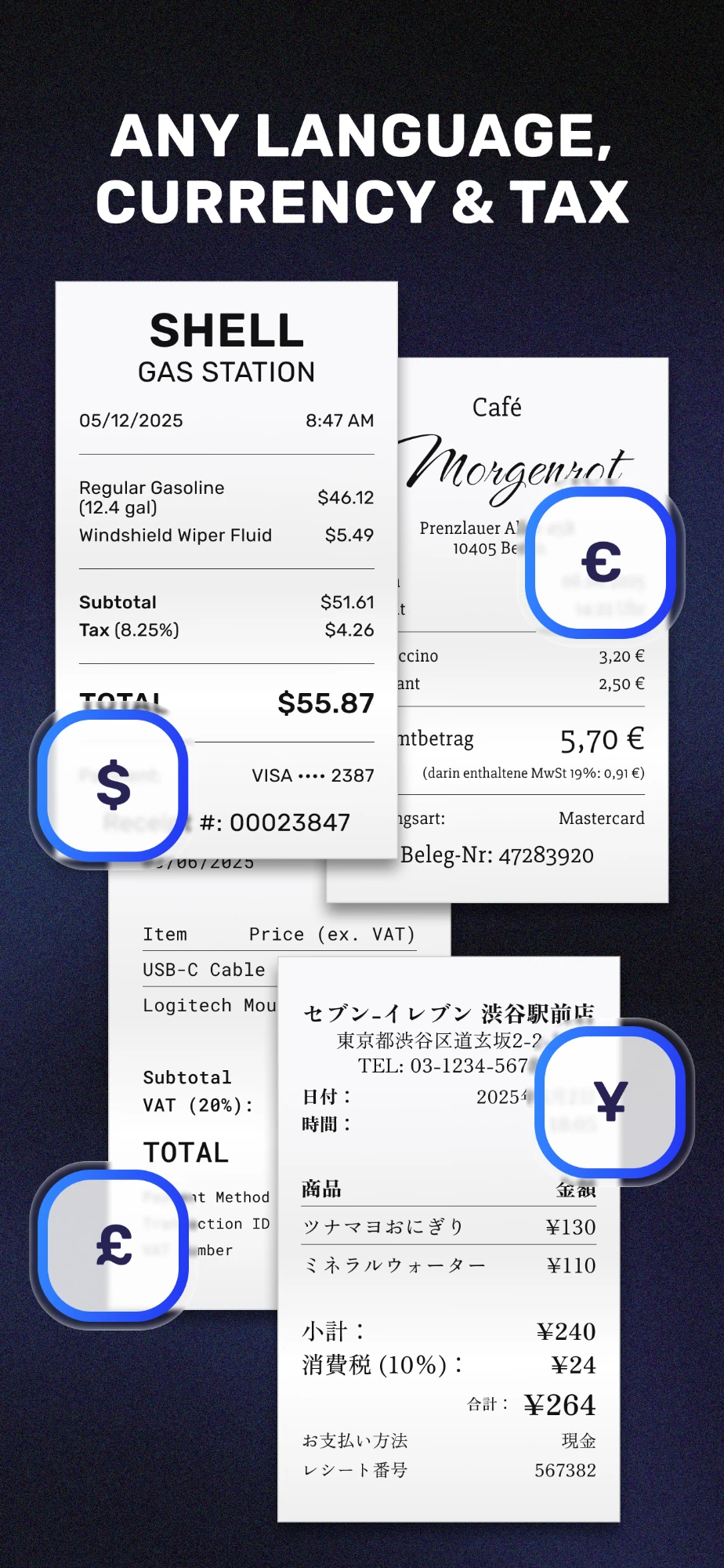
SparkReceipt reads gas receipts in 190 currencies, files them by category, and has a mileage tracker for business trips. 7-day free trial.
We earn a commission if you subscribe via our links. We're not SparkReceipt.