Can you deduct groceries on your taxes?
Not your own. Publication 334 lists personal, living and family expenses among the things you usually cannot deduct as business expenses, and food for your household is exactly that. Working from home does not change it.
A business expense has to be both ordinary and necessary: common and accepted in your field, and helpful and appropriate for your business. When one purchase is partly business and partly personal, Publication 334 says to separate the two, because the personal part is generally not deductible.
When does a grocery receipt matter for a business?
Keep it when what you bought was for the business. The common cases:
- Food you buy to sell or to use in what you sell, as a caterer, baker or food truck does. Publication 334 says that if you make or buy goods to sell, you deduct the cost of goods sold, which means keeping inventory records.
- Supplies bought at a grocery store for the business, such as cleaning products or paper goods for your shop or office.
- Food for a business meal with a client, which follows the business meal rules in Publication 463, generally a 50% deduction, with a record of who it was for and why.
- Meals and snacks for children in a family daycare, where the Schedule C instructions let you use standard meal and snack rates instead of actual costs.
Should I keep grocery receipts for the sales tax deduction?
Only if you plan to use them. If you itemize, IRS Topic 503 lets you deduct state and local general sales taxes instead of state and local income taxes, using either your actual expenses or the optional sales tax tables. Receipts matter only for the actual-expense method. The tables do not need them, and the deduction for state and local taxes has an overall limit.
What receipts should a 1099 worker keep?
Every receipt for a business expense, and the documents that prove your income. For expenses, the IRS asks for documents that show who you paid, the amount, proof of payment, the date and what you bought. For income, keep each Form 1099 you receive with your deposit records. Grocery receipts belong in that pile only when they meet one of the business cases above.
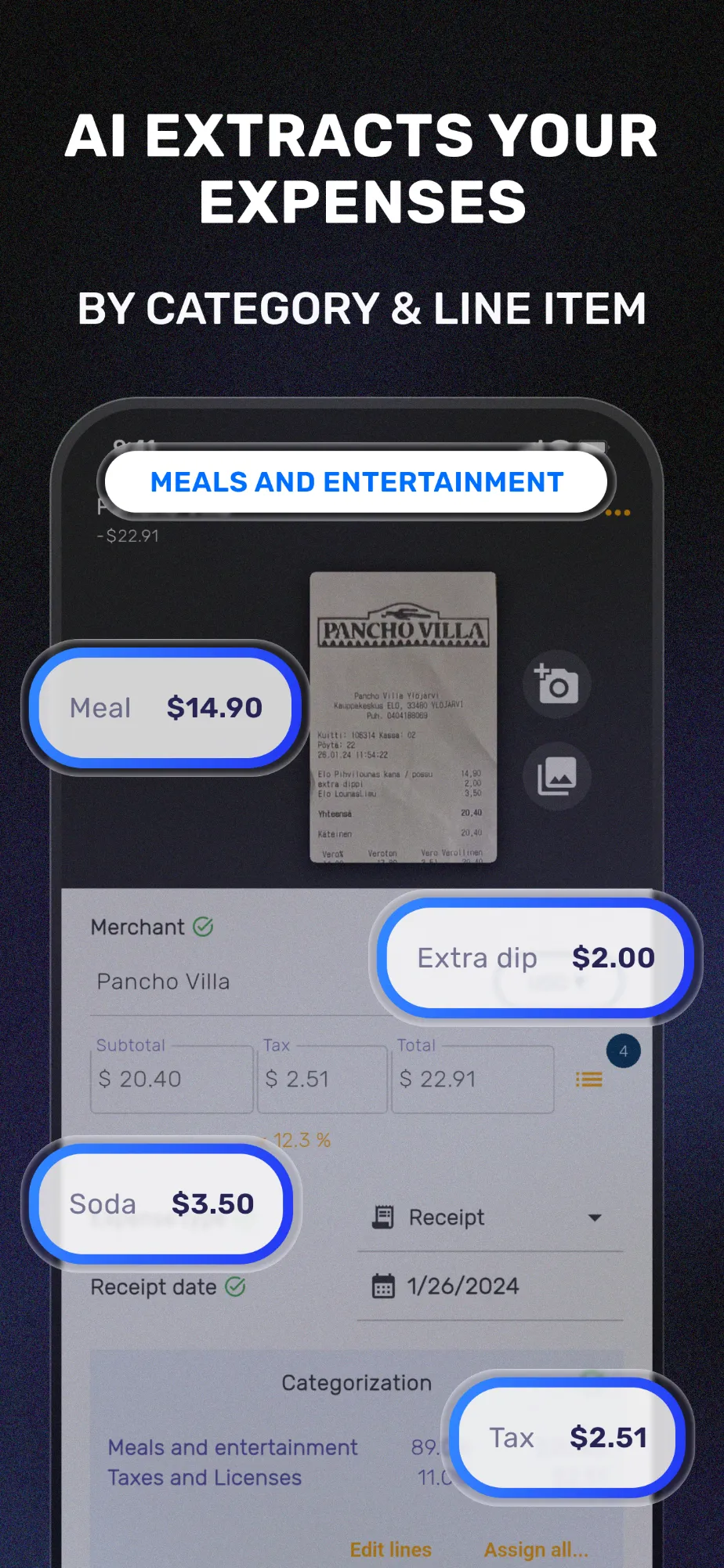
What if one receipt has business and personal items?
Mark the business items on the receipt, write the business reason beside them, and claim only those. An itemized receipt makes this easy because each item has its own price. Paying for business purchases separately, ideally on a card you use only for the business, saves the step entirely.
Sources: IRS Publication 334 (2025), Tax Guide for Small Business (read October 30, 2026); IRS Topic no. 503, Deductible taxes (read October 30, 2026); IRS Publication 463 (2025), Travel, Gift, and Car Expenses, chapter 5 (read October 30, 2026); IRS, What kind of records should I keep (read October 30, 2026); IRS, Instructions for Schedule C (Form 1040) (2025), Part II expense lines (read October 30, 2026).
Split business from personal as you shop
SparkReceipt reads each receipt line by line on the Elite plan, so the business items are easy to mark and file by category. 7-day free trial.
We earn a commission if you subscribe via our links. We're not SparkReceipt.