What tax documents does an accountant need?
For a freelancer or small business, a tax organization worksheet usually comes down to this list:
- Income: every Form 1099 you received, such as 1099-NEC, 1099-MISC or 1099-K, plus deposit records, invoices and receipt books.
- Expenses: receipts, paid bills, canceled checks and card or bank statements, sorted by the expense lines of Schedule C.
- Car: your mileage log, or your actual car expenses if you use that method.
- Assets: purchase and sale records for equipment, vehicles or property the business owns.
- Estimated tax: the dates and amounts of any estimated payments you made during the year.
- Last year's return, which the IRS says helps when preparing future returns.
How do I organize tax documents?
The way the IRS suggests: by year, then by type of income or expense. Make one folder for the tax year with a section for each part of the list above, and use the same sections every year, so you and your accountant always know where to look. It works the same on paper or on a computer.
How do I prepare receipts for my accountant?
Sort them by category, total each category, and write the business reason on any receipt that does not show it. Match them against your statements so nothing is missing. If a receipt is lost, write a statement for it with our Missing Receipt Affidavit tool and include it with the statement line that shows the payment.
What is a tax document organizer?
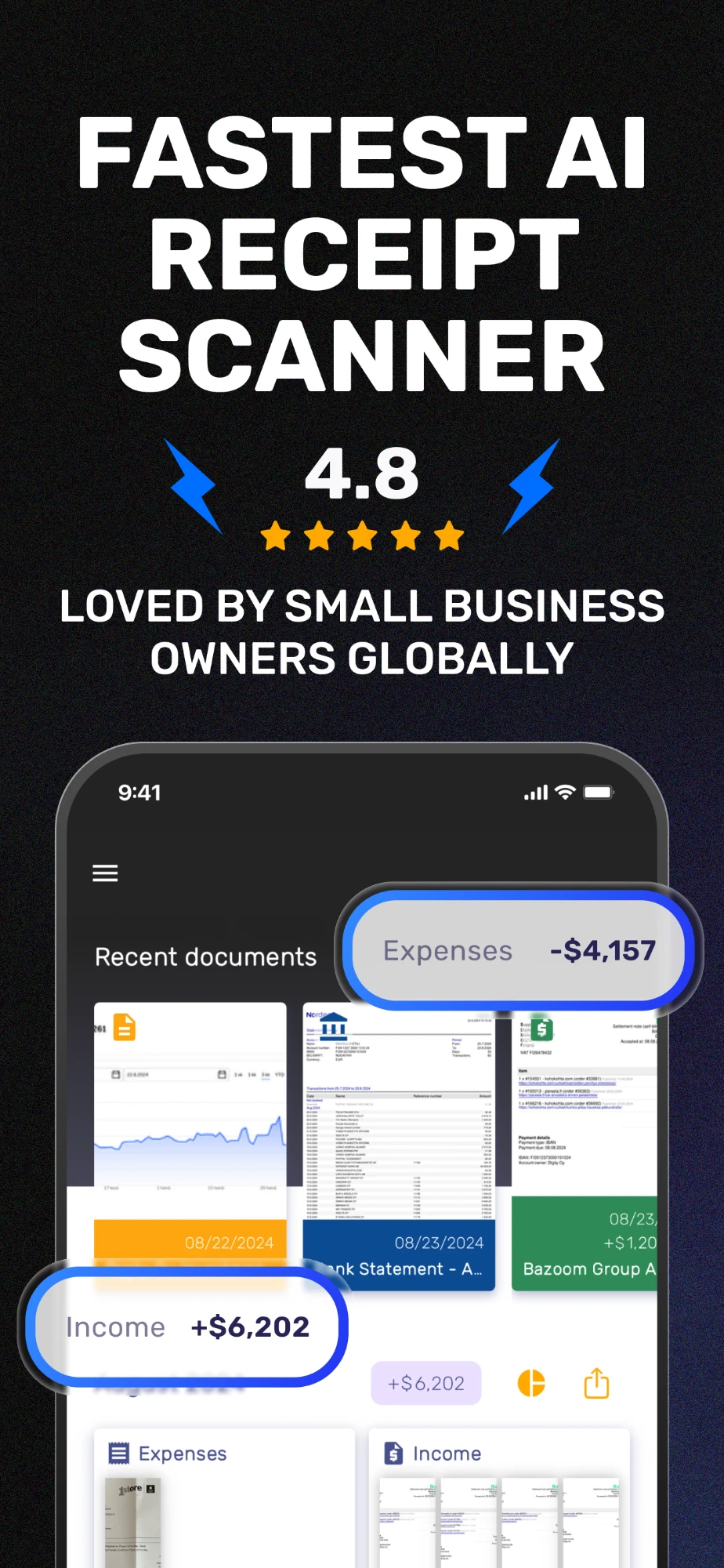
Anything that keeps the year in fixed sections: an accordion file with labeled pockets, a set of computer folders, or a receipt app that sorts as you go. The tool matters less than using the same sections every year. In SparkReceipt, your accountant can be invited into your account and, in SparkReceipt's words, joins free.
What is the best way to store tax documents?
In a safe place, with a second copy somewhere else. Publication 583 says electronic records must meet the same requirements as paper ones and must be stored so they can be retrieved and reproduced in a legible form. Keep them until the period of limitations ends for the return they support, generally 3 years after you file and longer in some cases.
Sources: IRS, What kind of records should I keep (read October 30, 2026); IRS, How long should I keep records? (read October 30, 2026); IRS Publication 334 (2025), Tax Guide for Small Business (read October 30, 2026); IRS, Estimated taxes (read October 30, 2026); IRS Publication 583, Starting a Business and Keeping Records, Electronic records (read October 30, 2026); SparkReceipt pricing page (read October 30, 2026).
Share the whole year with your accountant
SparkReceipt keeps receipts, income and bank statements in one place, sorted by category, and your accountant joins free, in SparkReceipt's words. 7-day free trial.
We earn a commission if you subscribe via our links. We're not SparkReceipt.