When are work clothes tax deductible?
The IRS says you can deduct the cost and upkeep of work clothes if two requirements are met: you must wear them as a condition of your employment, and the clothes are not suitable for everyday wear. Both have to be true.
What does not suitable for everyday wear mean?
The IRS spells it out. It is not enough that you wear distinctive clothing, and the clothing must be specifically required. Nor is it enough that you do not, in fact, wear your work clothes away from work. The clothing must not be suitable for taking the place of your regular clothing.
Workers the IRS lists as possibly able to deduct work clothes include delivery workers, firefighters, health care workers, law enforcement officers, letter carriers, professional athletes and transportation workers.
What if my job has a dress code or a required look?
Being required to wear something is only the first half of the IRS test. The clothing must also be not suitable for everyday wear. Publication 529 gives two examples. A painter's white cap, shirt and standard work shoes, which the union required, are not distinctive in character. Blue work clothes a welder wears at the foreman's request are not deductible either.
We report what the publication says and do not decide whether a particular item of clothing qualifies. Please check with your tax accountant for the details and the correct answer.
What protective clothing can I deduct?
The IRS says you can deduct the cost of protective clothing required in your work, such as safety shoes or boots, safety glasses, hard hats and work gloves. Carpenters, electricians, machinists and truck drivers are among the workers it says may be required to wear safety items. Steel toe boots that your carpentry or rigging work requires are safety footwear. Ordinary boots bought because they look right are not.
Are theatrical costumes deductible?
Yes for musicians and entertainers: the IRS says they can deduct the cost of theatrical clothing and accessories that are not suitable for everyday wear. For employees, this applies to qualified performing artists. See our guide Unreimbursed Employee Expenses.
Can I deduct upkeep and cleaning?
The IRS says cost and upkeep of work clothes that qualify. If the clothes do not qualify, neither does cleaning them.
Does this apply if I am self-employed?
A self-employed person deducts business costs under the ordinary and necessary test in Publication 334. The IRS wrote the work clothes test for employees, and it is the best guide to what counts as work clothing, so use its examples and ask a tax preparer about anything unclear.
Sources: IRS Publication 529 (2017), Miscellaneous Deductions, work clothes and uniforms (read October 31, 2026); IRS Publication 17 (2025), Your Federal Income Tax, miscellaneous deductions (read October 31, 2026); IRS Publication 334 (2025), Tax Guide for Small Business (read October 30, 2026); IRS, What kind of records should I keep (read October 30, 2026).
Keep the receipt for every piece of gear
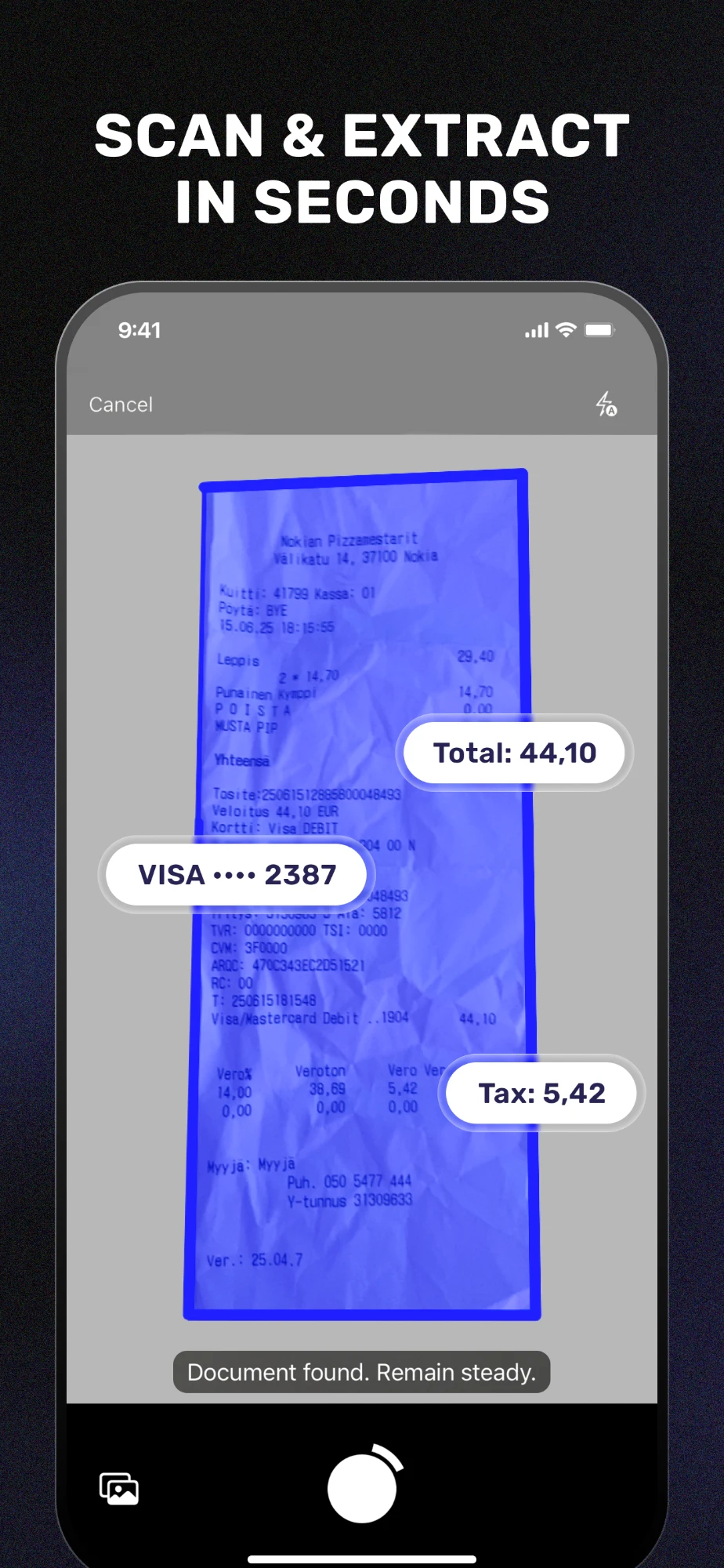
SparkReceipt files each receipt by category as you capture it, so work gear is easy to find at tax time. 7-day free trial.
We earn a commission if you subscribe via our links. We're not SparkReceipt.