Are live event and theater technicians employees or freelancers?
Both happen, sometimes in the same year. A freelancer who takes jobs from different venues and production companies and is paid on a 1099 is usually self-employed. A technician on a venue or show payroll is an employee. The IRS weighs behavioral control, financial control and the type of relationship, so the answer can change from job to job. Which one you are decides how deductions work.
What can freelance technicians deduct?
Costs that are ordinary and necessary for the work, claimed on Schedule C:
- Tools and supplies you carry to jobs: wrenches, multi-tools, flashlights and headlamps, tape, cable and adapters (see our guide Are Tools Tax Deductible)
- Certifications, licenses and training, which Publication 334 lists as education expenses and licenses and regulatory fees
- Travel away from your tax home: lodging, and generally 50% of meals
- Car miles for business trips, at 70 cents a mile for 2025, with a log
- The business share of your phone and software, and a home office if you meet the rules
What about work clothes?
Publication 529 (2017) says you can deduct the cost and upkeep of work clothes if you must wear them as a condition of your employment and they are not suitable for everyday wear. It also names protective clothing required in the work, and theatrical clothing for performers, as deductible.
That publication was written for employees, and the answer for a particular item depends on the facts, so this guide does not say whether any piece of clothing qualifies. Please check with your tax accountant for the details and the correct answer. Our guide Are Uniforms Tax Deductible shows what the publication says.
What about travel for tours and out-of-town shows?
Travel counts when you are away from your tax home long enough to need sleep or rest. Your tax home is your main place of business, or the home where you regularly live if you have none. Publication 463 says an itinerant, someone with no regular place of business and no place where they regularly live, cannot deduct travel expenses because they are never traveling away from home. If you tour, check where your tax home is before you claim travel.
Can employees and union members deduct these costs?
Generally no. Publication 17 says employees can no longer claim unreimbursed employee expenses, with exceptions for reservists, qualified performing artists, fee-basis officials and some employees with disabilities. The IRS examples for performing artists name musicians and entertainers, so ask a tax professional whether a backstage job qualifies. See Unreimbursed Employee Expenses.
What records should crew keep?
The receipt for every purchase, with the job it was for. For car trips, a log of the date, where you went, the business reason and the miles. For travel, the dates, the place and the business reason. Keep your invoices or call sheets for each gig, since they show the work the costs belong to.
Sources: IRS Publication 334 (2025), Tax Guide for Small Business (read October 30, 2026); IRS Publication 463 (2025), Travel, Gift, and Car Expenses, chapter 5 (read October 30, 2026); IRS Publication 17 (2025), Your Federal Income Tax, miscellaneous deductions (read October 31, 2026); IRS Publication 529 (2017), Miscellaneous Deductions, work clothes and uniforms (read October 31, 2026); IRS, Independent contractor (self-employed) or employee? (read October 31, 2026); IRS, What kind of records should I keep (read October 30, 2026).
Keep the paper trail for every gig
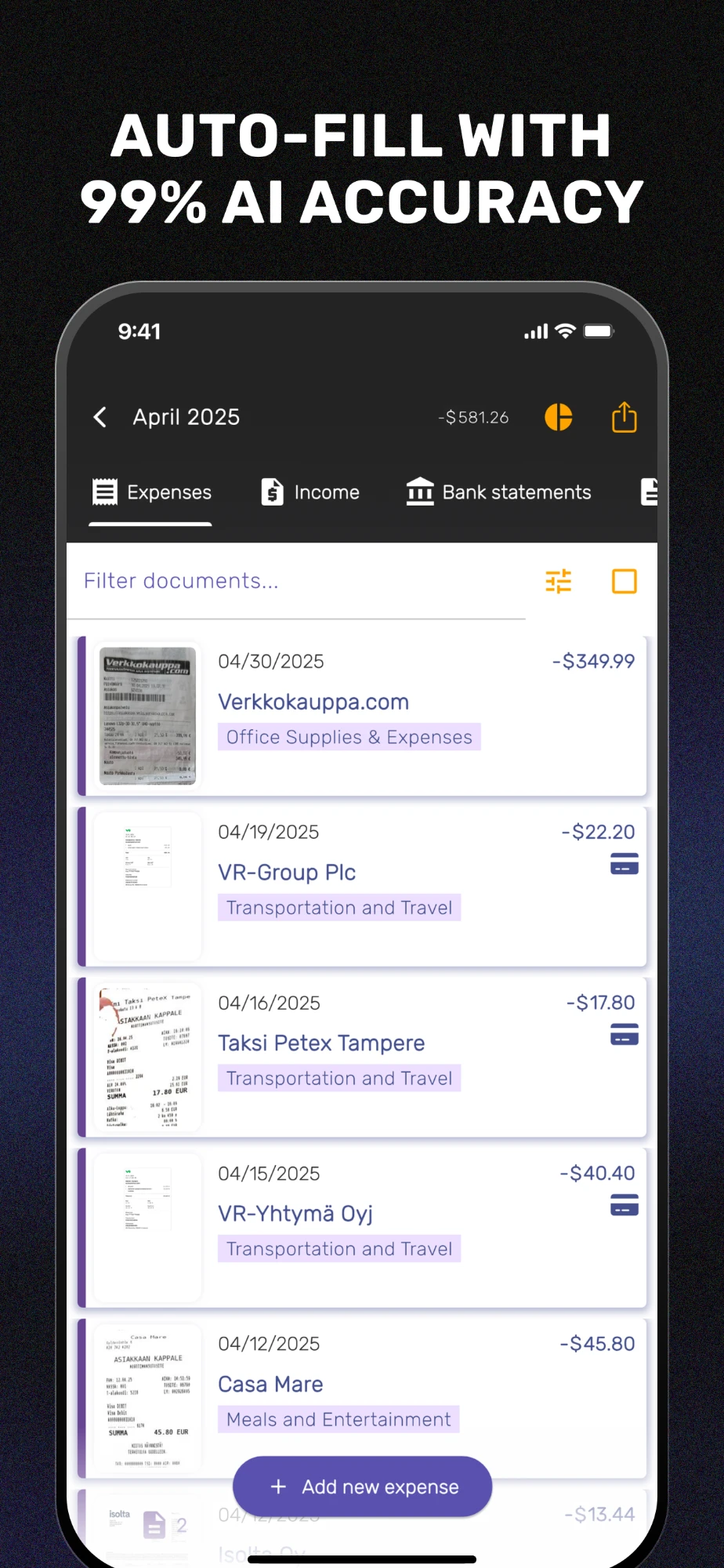
SparkReceipt captures receipts from your phone and inbox and files them by category, so tools, gear and travel are ready at tax time. 7-day free trial.
We earn a commission if you subscribe via our links. We're not SparkReceipt.