Is my home based work a business or a hobby?
The IRS says the biggest difference is that a business operates to make a profit, while a hobby is for pleasure or recreation, and no single factor decides it. It suggests asking:
- Do you carry out the activity in a businesslike manner and keep complete and accurate books and records?
- Does the time and effort you put in show that you intend to make a profit?
- Do you depend on income from the activity for your livelihood?
- Do you change your methods to improve profitability, and do you have the knowledge to run it as a successful business?
Why does it matter?
Publication 334 says that if you do not carry on the activity to make a profit, there is a limit on the deductions you can take, and you generally cannot use a loss from it to offset other income. Either way, profit from selling goods or services is taxable income, and good records matter.
What can a home based business deduct?
The same ordinary and necessary costs as any self-employed business, on Schedule C. Examples that fit that test include office supplies and materials, equipment, and the business share of the home when the space qualifies. Equipment up to $2,500 per item or invoice can be deducted in the year you buy it if you make the de minimis safe harbor election. Personal, living and family expenses are not deductible, so keep business and personal spending apart.
What about network marketers and other direct sellers?
Publication 334 has a section for direct sellers. You are one if you sell or solicit the sale of consumer products in a home or another place that is not a permanent retail establishment, substantially all your pay is directly related to sales or other output rather than hours worked, and your services are performed under a written contract that says you will not be treated as an employee for federal tax purposes.
A direct seller reports all income on Schedule C, including payments from customers for products, commissions, bonuses or percentages for your sales and the sales of others who work under you, and prizes, awards and gifts from the selling business. You report it whether or not you receive an information return.
The IRS does not publish a list of deductions just for network marketing. The general test applies: a computer, flyers or pens can be deducted when they are ordinary and necessary for your business, with a receipt.
What about affiliate marketers?
The IRS pages we used have no section written for affiliate marketers. The general rules apply: if you run the activity as a business to make a profit, you report the income and expenses on Schedule C and deduct ordinary and necessary costs. A payment app or marketplace may send a Form 1099-K, and Publication 334 notes that the amount on it may not be the amount you should report, so use your own records. Publication 334 says you have to file a return if your net earnings from self-employment were $400 or more.
What about street vendors and craft sellers?
Publication 334 has a chapter on cost of goods sold for anyone who makes, buys or sells goods. You value your inventory at the start and end of the year, and the items counted include merchandise, raw materials, finished products and supplies that physically become a part of the item you sell, such as the beads and wire in a piece of jewelry.
State and local sales taxes imposed on the buyer, which you must collect and pay over to the government, are not income. The IRS pages we used do not cover local vending permits or sales tax rules, so check with your state and city.
Can I deduct the space where I store inventory at home?
Yes, in one case without the exclusive use test. Publication 587 says you can deduct the business use of your home for storage of inventory or product samples if you sell products at wholesale or retail, you keep the inventory at home for your business, your home is the only fixed location of the business, you use the space regularly, and it is a separately identifiable space suitable for storage. The IRS example is a tool seller who regularly uses half of a basement for stock and sometimes uses it personally.
Sources: IRS Publication 587 (2025), Business Use of Your Home (read October 31, 2026); IRS Publication 334 (2025), Tax Guide for Small Business (read October 30, 2026); IRS Tax Tip 2023-61, Hobby or business: here's what to know about that side hustle (read October 31, 2026); IRS, What kind of records should I keep (read October 30, 2026).
Keep every receipt from the first sale
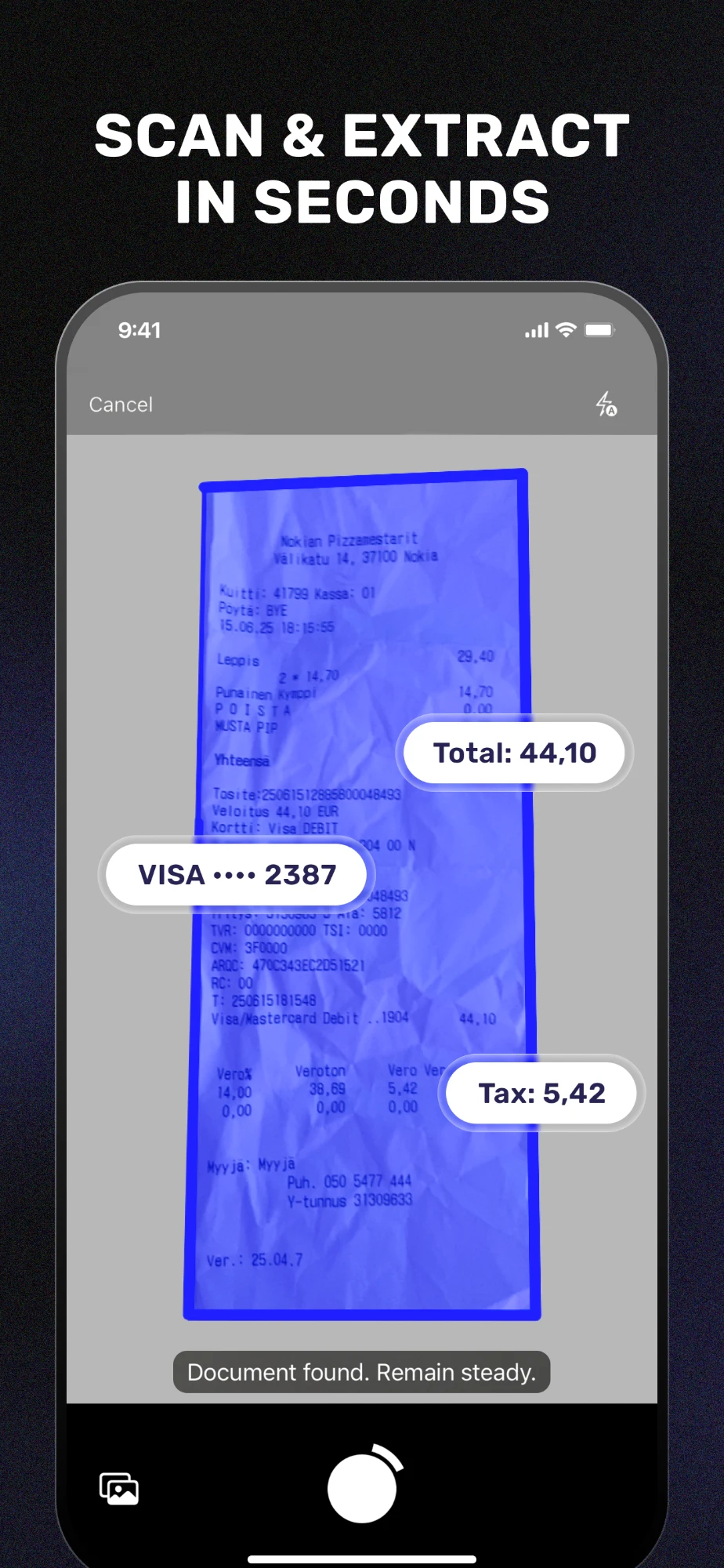
SparkReceipt scans paper receipts with your phone camera and files each one by category, so supplies, stock and equipment have their proof. 7-day free trial.
We earn a commission if you subscribe via our links. We're not SparkReceipt.